
TECHNOLOGICAL EDUCATION INSTITUTE OF CENTRAL MACEDONIA, GREECE
Department of Mechanical Engineering

Our Strategic Plan

Today, as we face another period of potentially transformative change, the Department of Mechanical Engineering of theTechnological Education Institute of Serres, Greece, has a crucial role to play and an important calling:
- To demonstrate to our nation and the world that progress is possible against the great problems of today and tomorrow -energy, climate, water, poverty – through the wise treatment of science and technology.
- We believe that we can set a path towards the future for Greek manufacturing, through innovative systems, processes and materials, and, building on our spirit, we can deliver the professionals that will drive the next wave of economic growth.
Nevertheless, just aiming at excellence is vague. Specific objectives and associated quantifiable metrics, based on strategic priorities, must be defined and implemented at all levels.
Inhibiting Factors:
Without any doubt, a key obstacle to the implementation of our Department’s plans is the lack of a stable framework for the educational sector in Greece. Among others,
- indecisiveness as regards the status of the Technological Education Institutes (TEIs), and
- the deterioration of the admitted students, due to a paradoxical central-government decided admission strategy, certainly jeopardize the efforts of the faculty of our Department.
Both the Universities and the TEIs are restrained by the law, which does not permit them to distribute the allocated funds and positions according to their needs; that is, they do not have sufficient self-governance to function according to their strategic planning. As a consequence, bringing good students and faculty in our Department and (more important) keeping them involved, is difficult.
- Each Institute should be given a budget and be allowed to manage it, according to its priorities.
- The evaluation process carried out by the ADIP, should be able to decide on the efficiency of the Institute’s management, on the basis of the corresponding strategic plan.
Furthermore:
In the middle of the current economic crisis, funding by the Institute’s Administration is uncertain at all levels. While our Department could function with the current resources, the desire for growth in a competitive environment is always healthy, as long as growth is pursued through strategic planning.
- We believe that strategic optimization of resources is the answer to the difficulties of the times.

Research:
It is important that the Department not only maintains, but rather strengthens its continuous efforts to produce world-class research.
- This requires the gradual renewal of the research staff and the research laboratories, including the state-of-the-art research infrastructure and facilities.
- On the other hand, there is no doubt that more investment in new faculty members is needed.
Restructuring of the research groups within the Sections of our Department (pointing at their closer collaboration) will improve the coherence in it, focusing on research and the interaction with other, international centers of research.
In the medium to long-term, we have planned important collaborations with national and international Institutes (Academy of Athens, Aristotle University of Thessaloniki, Democritus University of Thrace, Engineering School of Crete, University of Ioannina, University of West Macedonia, International Institute of Multifunctional Materials for Energy Conversion-IIMEC, Texas A&M University, etc.), as well as major world-class companies (Alpha Star Co., USA, etc.), which will help us to develop a more international orientation.
Finally, the Technological Education Institute of Serres, together with all the other TEIs in Greece, should continue to request (from the central government) the elaboration of Ph. D. Theses under the super-vision of their faculty members.
Under-graduate Curriculum:
The challenging economic environment in Greece creates, among other things, important demands for cost containment, and, above all, the need for more effective management of human capital within contemporary organizations. In particular, within small- and medium-size enterprises, the need to employ people who can do many things within the company, both effectively and efficiently, is becoming extremely important.
This fits well with the overall direction of the Department’s undergraduate curriculum, in the sense that, its “hybrid” Degree (energy and manufacturing) can be very attractive indeed.
It is therefore expected that, after completing their studies in the Department of Mechanical Engineering, our graduates are fully qualified for professional success.
In addition, companies are now looking for graduates with enhanced readiness and employability.
As such, the Department’s collaboration with industries and their (gradual) strategic engagement in curriculum design, teaching and research, is becoming imperative.
The MSc Studies Program in Renewable Energy Systems, proposed by the Department, is also expected to contribute to this direction.
Graduate Curriculum:
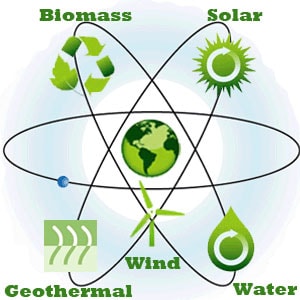
Nowadays, climate-change concern in connection to high oil-prices and the persistent threat of a worldwide energy crisis, have lead to a constantly increasing support for power generation from renewable energy (RE) sources. As a con-sequence, novel government policies (regarding spending & legislation) arise, helping the RE industry and commerciali-zation to grow, in spite of the global economic crisis.
In this context, the graduate program in RE, to be offered by the Department of Mechanical Engineering of the Techno-logical Education Institute of Serres, Greece, aims to:
Train graduate students in the design, development, and optimization of RE systems, in order to fill the gap between the growing industry demands for specialized RE expertise and the skills currently available in the job market.
Offer a closer encounter of the Department with the associated companies that are put in the region of Central Macedonia, exploiting the vast RE potential of the area (solar, wind and geothermal).
A system of fellowships, as well as teaching and/or research assistantships should be devised for the graduate students, so that more of them become involved in research, assisting the established scientific groups in their teaching (problem solving sessions, experimental exercises) and in their pursuit for quality research.
Faculty:
One of the main objectives of the Department is to inspire the next generation of young people, of every background, to understand that:
Science, mathematics and engineering can give them the exhilarating power to participate, not passively as spectators and consumers, but as the active explorers and the innovators who will design the future.
In this context, we believe that the Department’s curriculum is, structurally, well-organized. Nevertheless, the Department faces the danger of not being able to support its educational/subject basis, given the small number of permanent faculty and the diversity of its subject area.
There is no doubt that more investment in faculty is needed.
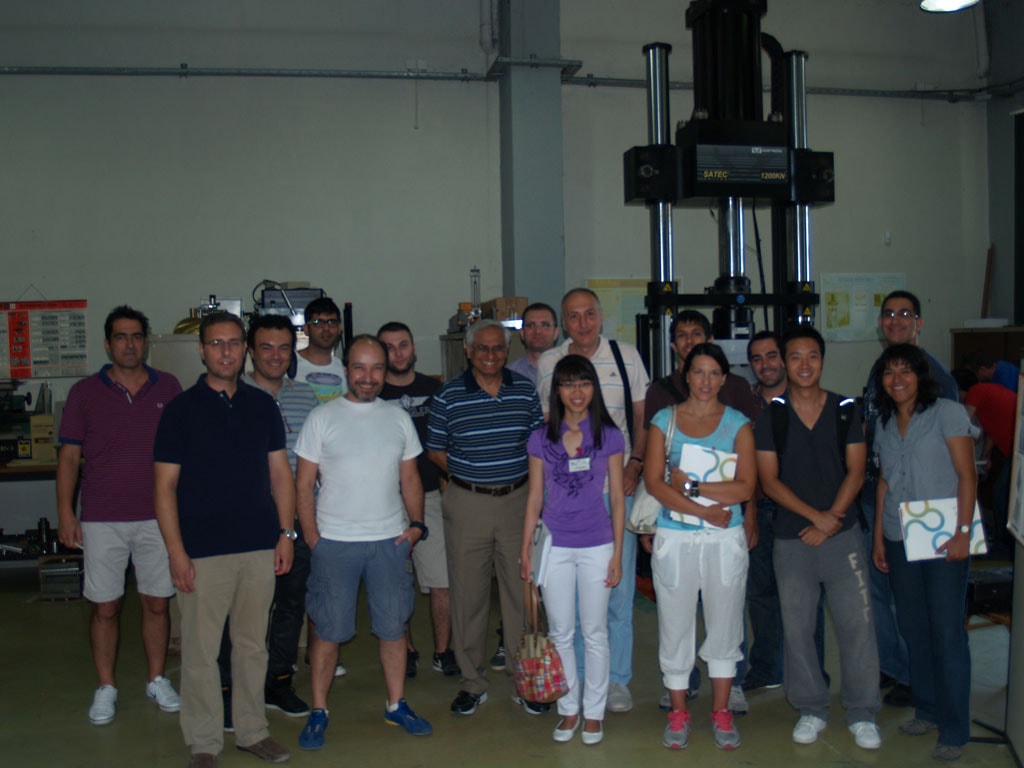
Moreover, the current number of technical personnel (i.e., 4) is clearly inadequate to cover the total needs of the Department, and especially those of the laboratories, taking into account the large number of students attending the laboratory sessions.
It must be organized in a better way, with, for example, the introduction of a teaching or research assistantship program for the graduate students.
Activities:
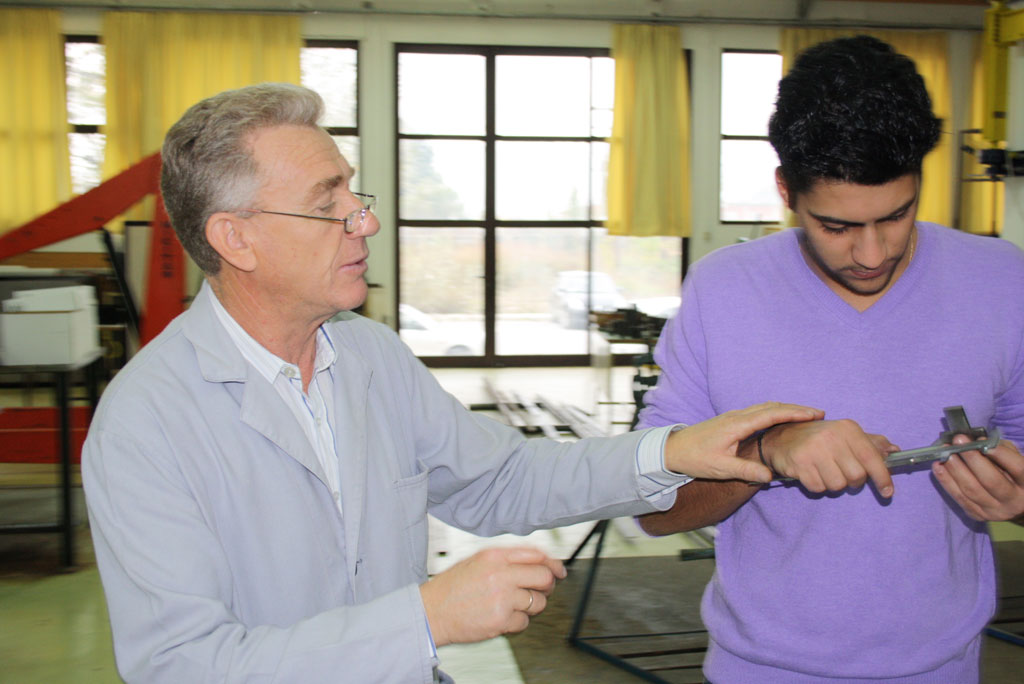
Among the various activities of our Department, the dissemination, transfer, and promotion of modern technologies to various areas of social and economic activity (e.g., commercial enterprises, industry, municipalities, etc.), is considered to be of fundamental importance.
This task involves industrial placements, consultancy work, and development of customized applications both by academics and graduates.
Evaluation:
Our Department has the right mentality to adapt to changes and will readily capitalize on the recommendations resulting from the ongoing evaluation process.
On behalf of the Department of Mechanical Engineering
The Head of the Department
Kostas Kleidis